

The first time a new investor sells shares at a profit, there's usually a small surprise: the amount that lands in the account is a little less than expected. That gap is capital gains tax, and it was quietly deducted for you. It catches people off guard not because the rate is high, but because nobody told them it existed.
Here's the good news — the system is designed so you rarely have to calculate or pay anything manually. This guide explains the capital gains rate (and why your holding period matters), how dividends are taxed, and shows both with simple worked examples so the numbers stop being a mystery.
Capital gains tax on listed shares
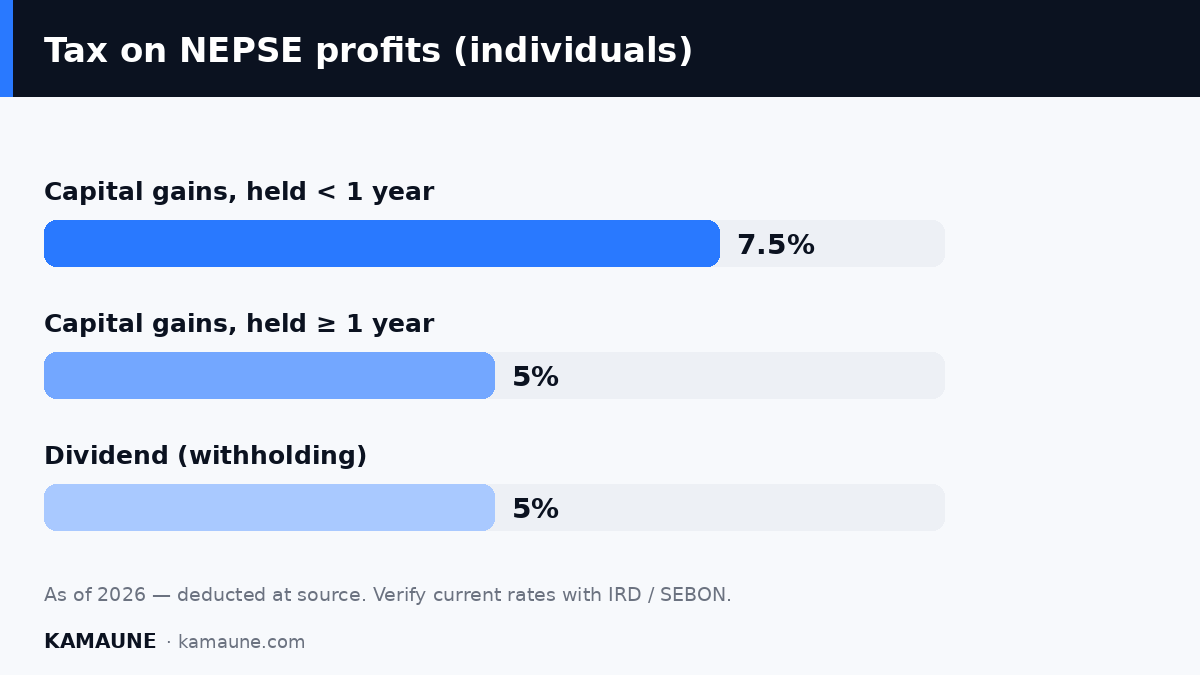
When you sell listed shares for more than you paid, the profit is a capital gain, and it's taxed. In Nepal, the rate for individuals depends on how long you held the shares:
| Holding period | Capital gains tax rate (individuals, 2026 snapshot) |
|---|---|
| Held under 365 days (short-term) | ~7.5% |
| Held 365 days or more (long-term) | ~5% |
The logic is deliberate: the system rewards longer holding with a lower rate, nudging investors away from rapid speculation. These are 2026 figures and rates do change, so verify the current rates with the Inland Revenue Department before you rely on them.
How it's calculated and deducted
You don't file a separate form for each trade. Capital gains tax on listed shares is generally deducted at source — handled through the broker/CDSC settlement process when you sell — so it comes off automatically and the net proceeds reach your account.
Worked example (short-term):
- You buy shares for NPR 100,000.
- Some months later (under a year) you sell them for NPR 120,000.
- Your gain is NPR 20,000.
- At ~7.5%, the capital gains tax is NPR 1,500.
- That NPR 1,500 is deducted at source, so you receive roughly NPR 18,500 of profit (before broker commission, which applies separately on both buy and sell — see how to buy and sell shares in Nepal).
Dividend tax
A dividend is a share of profit a company pays out to its shareholders. Dividends are also taxed, but through a withholding tax deducted at source — as of 2026, commonly cited at around 5%. That means the company deducts it before the dividend reaches you, so what lands in your account is already net of tax.
Worked example:
- A company declares a cash dividend and your share of it is NPR 10,000.
- At ~5% withholding, NPR 500 is deducted.
- You receive NPR 9,500.
Again, verify the current dividend tax rate with the IRD, as it can be revised.
Long-term vs short-term — why the holding period matters
Because the short-term rate (~7.5%) is higher than the long-term rate (~5%), the same profit is taxed differently depending on whether you crossed the 365-day mark.
Same NPR 20,000 gain, two timelines:
| Sold under 365 days | Sold at 365+ days | |
|---|---|---|
| Gain | NPR 20,000 | NPR 20,000 |
| Rate | ~7.5% | ~5% |
| Tax deducted | NPR 1,500 | NPR 1,000 |
| Net profit | ~NPR 18,500 | ~NPR 19,000 |
On this example, holding past a year saves NPR 500 in tax on the same gain. It's not a reason to hold a bad investment forever — but it's a real, built-in reward for patience worth keeping in mind when you decide when to sell.
All share-related taxes at a glance
It helps to see the two taxes side by side, because they work differently and hit at different moments:
| Tax | Applies when | Typical rate (2026 snapshot) | How it's collected |
|---|---|---|---|
| Capital gains tax | You sell listed shares at a profit | ~7.5% (held <365 days) / ~5% (held 365+ days), individuals | Deducted at source on sale |
| Dividend tax | A company pays you a dividend | ~5% withholding | Deducted before it reaches you |
The pattern is the same for both: the deduction happens automatically, so you receive amounts already net of tax. That's convenient, but it also means the tax is easy to overlook — which is why it's worth understanding rather than ignoring. Every figure here is a 2026 snapshot; confirm the current rates with the IRD before relying on them.
What you must still do
Even though tax is deducted at source, good habits protect you:
- Keep records of your purchase prices, sale proceeds, and the tax deducted. You'll want them for your own accounting and if you ever review your overall tax position.
- Understand your wider tax picture. Share gains are one piece; if you also earn freelance or business income, see how tax fits together in the broader guide to freelancer and online-income tax in Nepal.
- Fit shares into your overall plan. Tax is just one factor in whether shares beat fixed deposits, gold, or mutual funds for you — compare them in best investment options in Nepal.
If you're still learning where all this sits in the bigger journey, start from the pillar: how to invest in the share market in Nepal.
Frequently Asked Questions
How much is capital gains tax on shares in Nepal?
As of 2026, capital gains tax on listed shares for individuals is commonly cited at around 7.5% if held under 365 days and around 5% if held 365 days or more. Verify current rates with the IRD.
Is it deducted automatically?
Yes — capital gains tax on listed shares is generally deducted at source through the broker/CDSC settlement process, so you receive the net proceeds without filing a separate form for each trade.
How are dividends taxed?
Dividends are subject to a withholding tax deducted at source, commonly cited at around 5% as of 2026. The company deducts it before paying you, so your dividend arrives net of tax.
Do long-term holdings pay less tax?
Yes. Holding listed shares for 365 days or more attracts a lower capital gains rate (~5%) than selling within a year (~7.5%), for individuals — a built-in reward for holding longer.
Conclusion
Tax on NEPSE profits is real but rarely a headache: capital gains are deducted at source when you sell, dividends arrive already net of withholding, and holding past a year lowers your rate. Know the numbers, keep basic records, and factor tax into your decisions — but let the system do the heavy lifting of collecting it.
This article is educational, not financial or legal advice. Rules, rates, and fees change — verify with the relevant official source (IRD, SEBON, NEPSE) or a qualified professional before acting.
Understand the money you keep, not just the money you make — join the Kamaune newsletter. See how shares compare to FDs, gold, and funds: best investment options in Nepal.