Two questions come up every single time a Nepali creator thinks about YouTube: "how long until it pays anything?" and "how does the money even reach Nepal?" The honest answers are "longer than you hope" and "through AdSense into your bank, once you cross a threshold" — and almost every hype video skips both. This guide answers them straight, walks through the real ways creators earn, and treats blogging as the slower sibling that quietly compounds.
What this guide will not do is quote you a fake "Nepali YouTubers earn NPR X per month" figure. Those numbers are made up, vary wildly by niche and audience, and set you up for disappointment. What matters more is understanding the income streams, the requirements to unlock them, and how payout works — so you can decide if the multi-month grind is worth it for you.
How creators actually earn (it's rarely just ads)
Ad revenue is the headline, but experienced creators earn from several streams — and the non-ad ones often pay more, sooner:
- AdSense (ad revenue). YouTube shows ads on your videos and shares the revenue. This requires being accepted into the YouTube Partner Program first (see below).
- Sponsorships and brand deals. A brand pays you to feature or mention its product. Often the biggest earner once you have an engaged audience — and it doesn't require ad monetization to start.
- Affiliate marketing. You recommend products with a tracked link and earn a commission on sales. Works on both YouTube and a blog.
- Your own products or services. Courses, merchandise, consulting, or freelance work that your content feeds. This is how many creators turn an audience into a real business.
The takeaway: don't wait for AdSense to start earning. An engaged audience can be monetized through sponsorships, affiliates, and your own offers well before — or alongside — ad revenue.
YouTube monetization requirements
To earn ad revenue, you must be accepted into the YouTube Partner Program (YPP), which requires crossing subscriber and watch-hour (or Shorts view) thresholds within a set period, plus following YouTube's policies. The exact numbers change, so verify the current YouTube Partner Program requirements on YouTube's official Help pages before you rely on them.
Two things that don't change:
- You need real, watchable content people actually watch — the thresholds exist to filter out empty channels.
- Sponsorships, affiliates, and your own products don't require YPP. If ad monetization feels far off, these are your earlier income routes.
How you get paid in Nepal
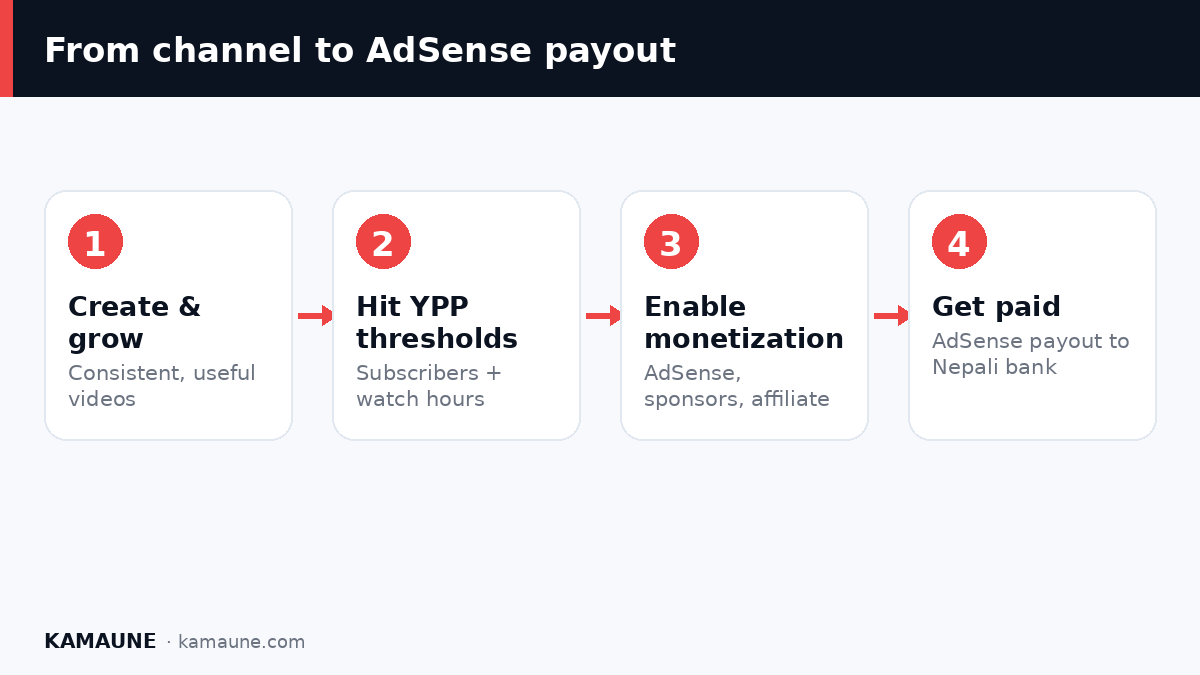
This is the part everyone worries about, and the answer is reassuringly boring: Google AdSense pays creators in Nepal into a linked bank account once your balance crosses a payment threshold. You link your Nepali bank details in AdSense, verify your identity and address, and once you've earned above the threshold, payment is issued on Google's payout cycle.
The specific threshold amount and the available payout method(s) for Nepal can change, so verify the current AdSense payment threshold and method in your AdSense account and Google's official documentation. Note that AdSense income arrives from abroad — the same category as other foreign creator/service income — so keep clean records of what you receive. For the broader picture of receiving international money in Nepal, our guide on how to get paid from abroad in Nepal is useful background, though AdSense pays to your bank directly.
Blogging: the slower, compounding path
YouTube is intensive to produce; blogging is slower to grow but compounds beautifully. A well-written article that ranks in search keeps pulling in readers — and income — for years, with no camera and no editing.
- How blogs earn: display ads (AdSense and others), affiliate links, sponsored posts, and selling your own products or services.
- How they grow: search engine optimization — writing genuinely useful content around what people search for. This very site is built that way.
- Why it compounds: unlike a video that peaks in its first week, an article that ranks earns quietly month after month.
Many creators run both: video for reach and personality, a blog for durable search traffic. If you're building an audience to sell to, this pairs naturally with running it as a business.
Realistic income and timeline
Here's the part hype leaves out: most channels and blogs earn little to nothing for the first several months. Growth is non-linear — long flat stretches, then jumps. Ad rates vary hugely by niche, audience location, and season, so two creators with the same subscriber count can earn very differently.
Rather than chasing a number, judge progress by leading signs: are watch time and returning viewers growing? Are people commenting and sharing? Those come before the money, and they're what sponsors and search engines reward. Treat the first phase as building an asset, not earning a salary.
Turning it into a business (and the tax side)
Once content earns consistently, it's a business — treat it like one. That means separating the money, keeping records, and formalizing. Our guide to starting an online business in Nepal covers building products and services around an audience, and if you're a student building a channel around classes, side hustle ideas for students in Nepal puts content creation in context.
On tax: creator income — including AdSense — is income, and once it's consistent and meaningful it's taxable. Understand your obligations early; tax for freelancers and online earners in Nepal explains PAN and how online/foreign income is treated (verify current rules with the IRD).
Frequently Asked Questions
How does YouTube pay creators in Nepal?
Through Google AdSense, into a linked Nepali bank account, once your earnings cross AdSense's payment threshold. You add your bank and identity details in AdSense, verify them, and payment is issued on Google's payout cycle. Verify the current threshold and payout method in your AdSense account, as they can change.
What are the requirements to monetize on YouTube?
You must be accepted into the YouTube Partner Program, which requires meeting subscriber and watch-hour (or Shorts view) thresholds within a set period and following YouTube's policies. The exact numbers change — verify the current YouTube Partner Program requirements on YouTube's official Help pages.
Can I really earn from blogging in Nepal?
Yes, though it's slower than YouTube to start. Blogs earn through ads, affiliate links, sponsored posts, and selling your own products, and grow through search engine optimization. The advantage is compounding: a ranking article keeps earning for years with no ongoing production.
Is creator income taxable in Nepal?
Once it's consistent and meaningful, yes — creator income (including AdSense) is income. Understand your obligations early; see tax for freelancers in Nepal for how PAN and online income work, and verify current rules with the IRD.
Conclusion
Earning from YouTube and blogging in Nepal is real, but it's an asset you build, not a switch you flip. Understand the income streams (ads are only one), know that sponsorships and your own products can pay before AdSense does, get your payout details set up correctly, and give it the months it genuinely takes. Blogging rewards patience with compounding search traffic; YouTube rewards consistency with reach.
Pick your format, publish something this week, and judge your progress by watch time and returning viewers long before you judge it by rupees.
Content is one of many ways to earn online — see the full picture in how to earn money online in Nepal, and join the Kamaune newsletter for one practical, tested earning idea each week.